
Zambia Double Migration Safari 2027
Overview
The Zambia Double Migration Safari combines two of Africa’s most remarkable wildlife spectacles in one overland expedition: the fruit bat migration of Kasanka National Park and the wildebeest migration of Liuwa Plain National Park.
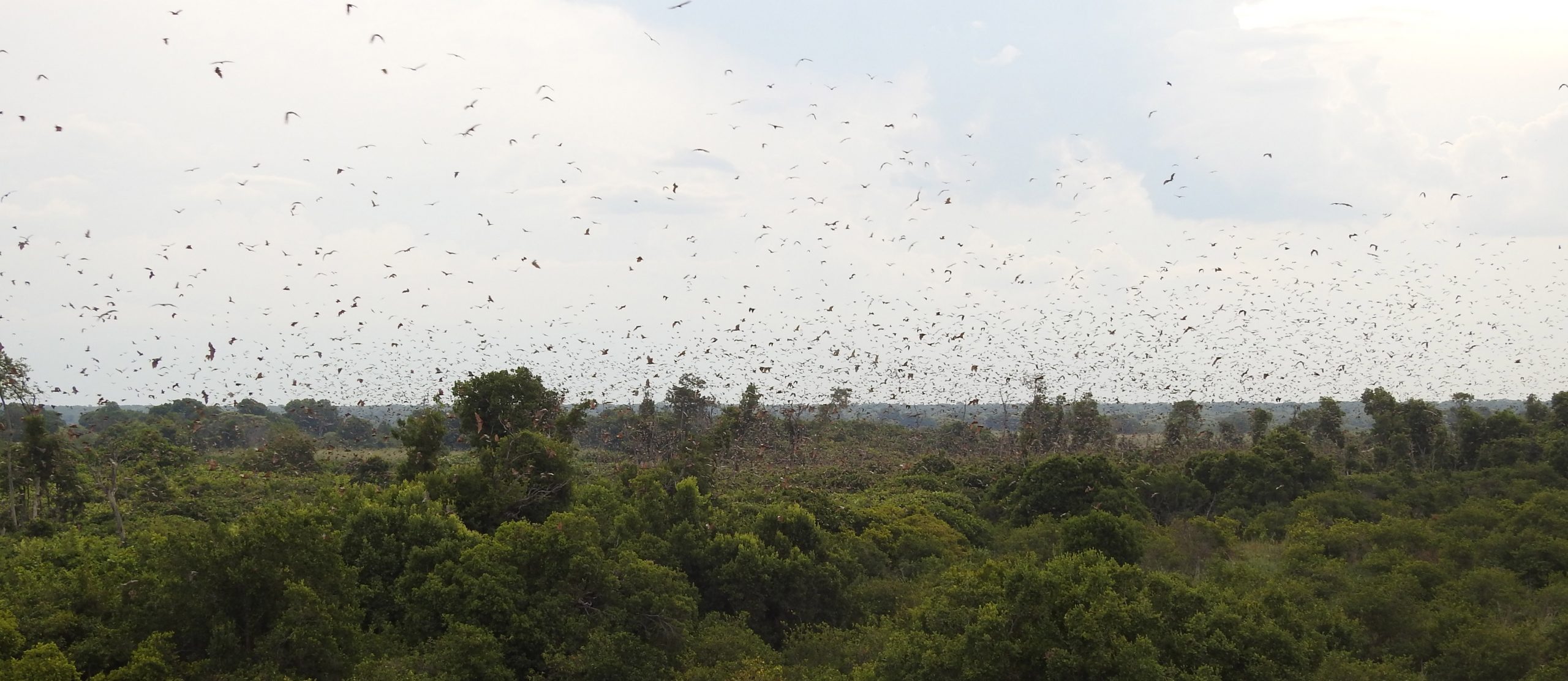
Each year between October and December, when the forest trees begin to fruit, millions of straw-coloured fruit bats gather in a small swamp forest in Kasanka, creating the largest mammal migration on Earth by number. At sunset the bats rise in vast swirling clouds, filling the sky as they leave the forest to feed across the Zambian countryside — an unforgettable natural spectacle.
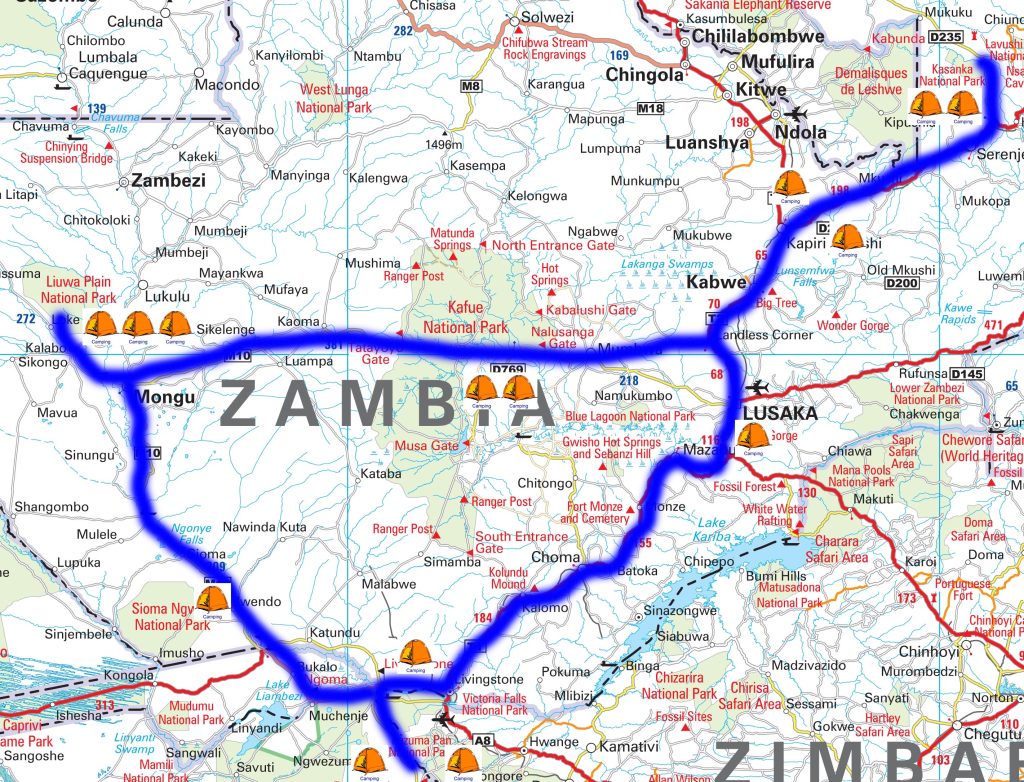
From Kasanka the journey continues south through Kafue National Park, one of Africa’s largest wilderness areas, before travelling west to the remote plains of Liuwa Plain National Park.
Here, thousands of wildebeest arrive with the first rains, gathering on the vast grasslands for their calving season. Predators, birdlife and endless open horizons make Liuwa one of Africa’s most authentic and least-visited safari destinations.
This 14-night camping expedition starts and ends in Nata, Botswana, and travels through more than 3,000 km of Zambia’s wild landscapes, offering adventurous travellers the chance to experience two extraordinary migrations in a single journey.
— Chris van Niekerk
Tour at a Glance
- Departs 15 November 2027
- 14 nights
- ±3,200 km — Nata to Nata, mostly through Zambia
- R20,900 per person sharing (incl. VAT)
- Max 14 guests — children welcome from 12
- 4x4 required
- Tar, gravel and sandy tracks
- Campsites generally have hot showers, flush toilets and limited 220V charging
Estimated Customer Budget
| Bluerhino Tour Price – per Person | R20,900 |
| Bluerhino Tour Price – Total (2 Guests) | R41,800 |
| Fuel (Meeting point to farewell) | TBC |
| Border Fees (Own Vehicle) | TBC |
| Total Customer Budget (2 Guests, 1 Vehicle) | R41,800 + fuel & borders |
Estimate only — Tour price includes all camping fees, park entry fees and guide fees. Not included: fuel, food, border crossing fees, activities and personal miscellaneous costs. Assumes 2 guests sharing one self-drive vehicle.
A Typical Day on Tour
Mornings start early — the sounds of Africa are best enjoyed with a cup of coffee and a rusk in hand. I’m usually up around 6am, and on a normal day we aim to be on the road about one and a half hours after sunrise. I’m firm on timekeeping — it’s only fair to the people who got up early to be ready.
Once we’re moving, we drive for around two hours before the first coffee stop — kettle’s on, with about 30 minutes to stretch your legs. Bring your cup and magic powders, I will supply the hot water.
A second stop follows around 2 hours later and it is normally a 45 minute lunch stop. Again I boil a kettle.
From here we can normally get to camp, but will stop if needed.
Once we’re in camp, I get a fire going, and supply the wood and charcoal — just bring your own braai grid. Evenings are for swapping stories around the fire, or private dinners with your spouse by candle light in the bush. I am easy with your choice.
The Itinerary
Day 1 — Nata & the Makgadikgadi Pans, Botswana (15 November 2027)
Our expedition begins as the group meets in Nata, on the edge of the vast Makgadikgadi Pans. These enormous salt pans are the remains of an ancient inland sea and form one of the most striking landscapes in southern Africa — a dramatic introduction to the journey ahead.
Day 2 — Livingstone & the Zambezi River, Zambia
Crossing into Zambia, we travel to Livingstone, on the banks of the mighty Zambezi River. This historic town lies close to Victoria Falls, one of the natural wonders of the world, and marks the beginning of our Zambian adventure.
Day 3 — Lusaka region
Travelling north through rural Zambia, we reach the Lusaka region, in the heart of Zambia’s central farming belt — an ideal staging point before we continue further into the country.
Day 4 — Central Zambia
The journey continues through Zambia’s extensive miombo woodland, an ecosystem that stretches across much of southern Africa and supports rich birdlife and wildlife.
Days 5–6 — Kasanka National Park: the fruit bat migration
We arrive at Kasanka National Park, home to one of Africa’s most extraordinary wildlife spectacles.
Each year between October and December, millions of straw-coloured fruit bats gather in a small swamp forest when the wild fruit trees begin to ripen. At sunset the bats emerge in enormous waves, filling the sky for nearly an hour as they leave the forest to feed across the surrounding countryside.
Watching this from raised viewing platforms in the forest canopy is an unforgettable wildlife experience — and the first of the two great migrations of our expedition.
Day 7 — Central Zambia
After our time in Kasanka we begin travelling south again through rural Zambia, back towards the centre of the country.
Days 8–9 — Kafue National Park
Our route now takes us through Kafue National Park, one of Africa’s largest protected wilderness areas.
Kafue is known for its vast savannas, river systems and exceptional birdlife. Depending on seasonal road conditions we may explore parts of the park or enjoy a relaxed riverside camp, watching wildlife along the riverbanks.
Days 10–12 — Liuwa Plain National Park: the wildebeest migration
Continuing west, we reach the remote plains of Liuwa Plain National Park, one of Africa’s least-visited and most authentic safari destinations.
With the arrival of the seasonal rains, thousands of wildebeest gather on the plains for their calving season, creating Africa’s second-largest wildebeest migration. The grasslands stretch to the horizon and support predators such as lion, cheetah and Liuwa’s famous spotted hyena clans.
Day 13 — The Zambezi River
Leaving the plains, we travel south to the Zambezi River for a final evening beside one of Africa’s great rivers. The region is famous for its birdlife, beautiful river scenery and excellent tiger fishing.
Day 14 — Back to Nata, Botswana
Our journey continues south as we cross back into Botswana and return to Nata for our last night together, reflecting on the extraordinary experiences of the expedition.
Day 15 — Departure (29 November 2027)
The expedition ends after breakfast, after a remarkable journey through Zambia’s wilderness and two of Africa’s great wildlife migrations. Everyone heads home their own way.

Join the Bluerhino Newsletter
Get new tour dates, availability and safari stories straight to your inbox — no spam, just Africa.