
Overview
Kaokoland & Damaraland Safari – Namibia
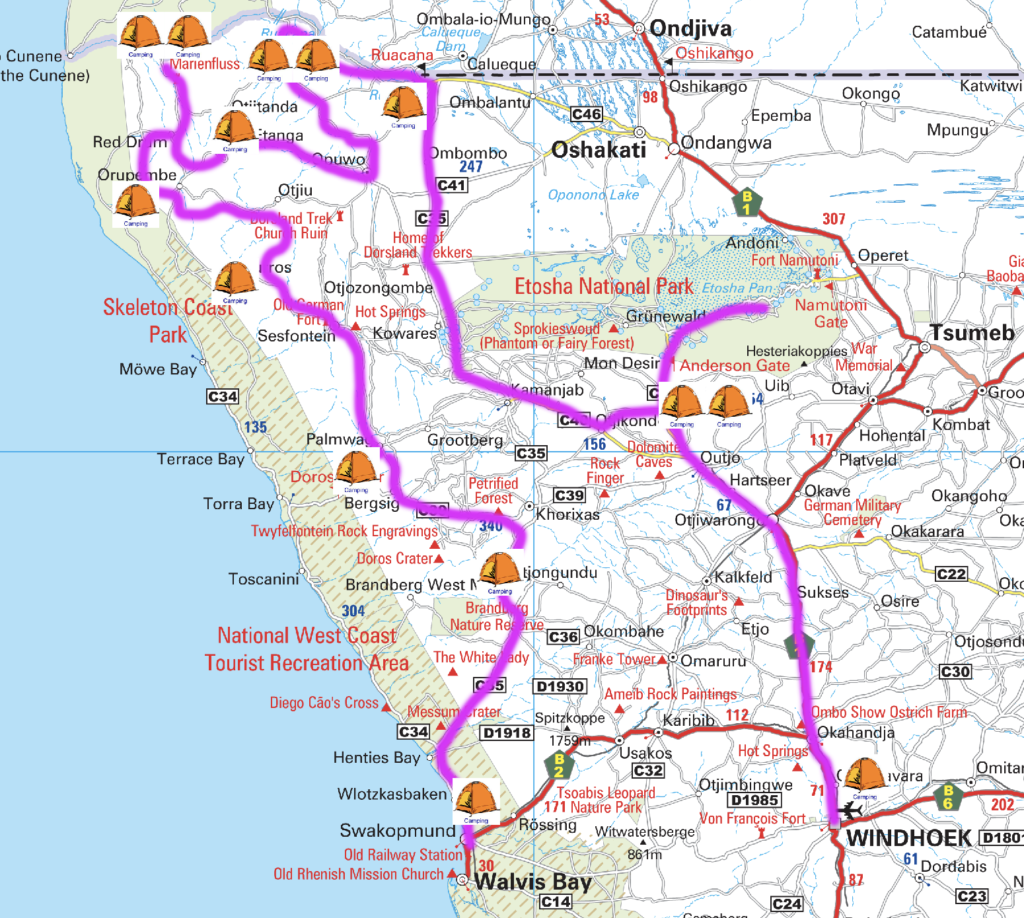
This unforgettable overland journey begins in Windhoek and heads north to the legendary Etosha National Park, where guests can enjoy a full day exploring one of Africa’s greatest wildlife reserves. From there the adventure continues to the Kunene River and the spectacular Epupa Falls, a lush oasis on Namibia’s remote northern border.
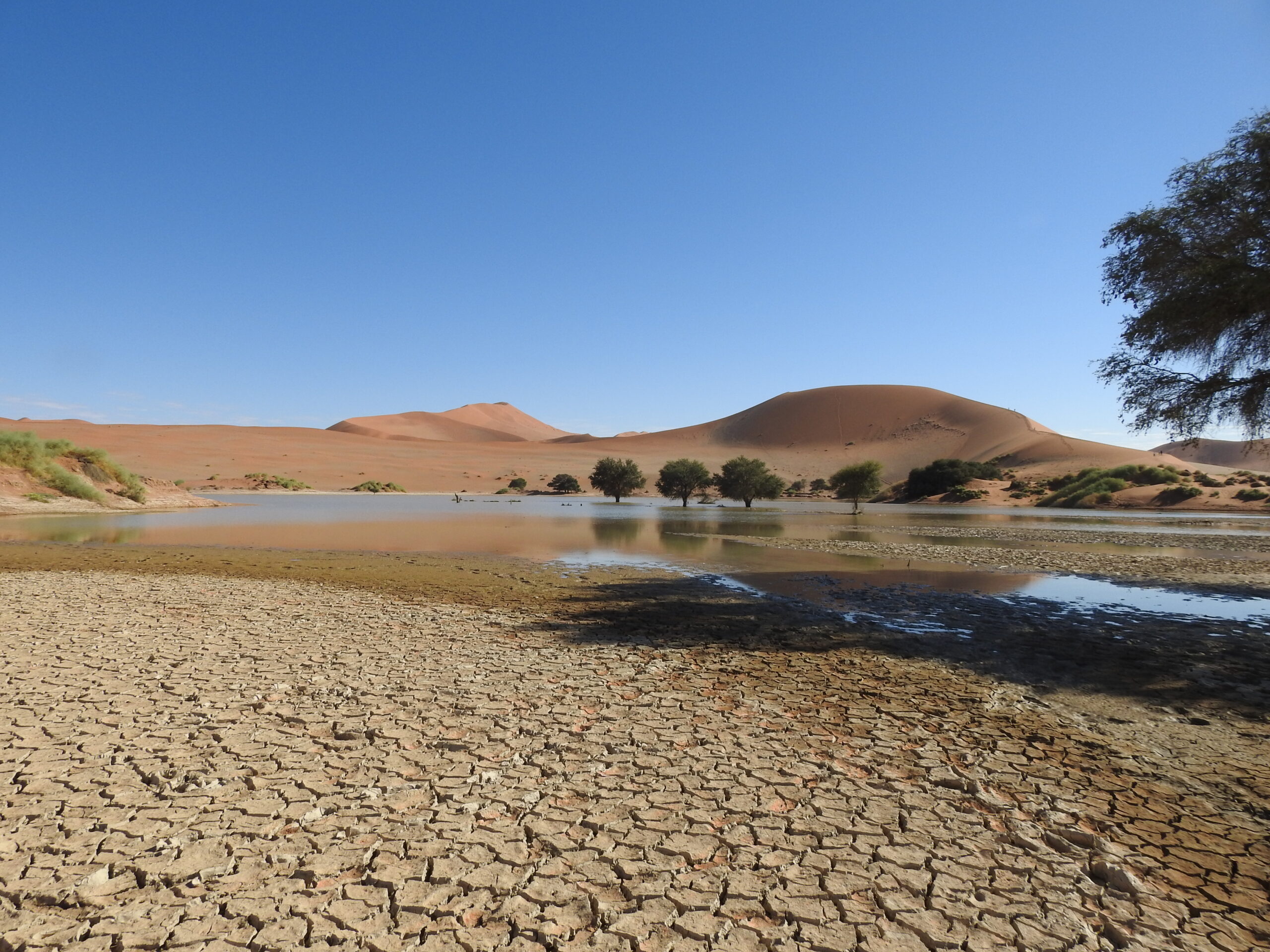
Travelling through Kaokoland, one of the wildest and least-visited regions in Southern Africa, the route follows rugged tracks along the Kunene and across dramatic escarpments into the vast Marienfluss valley. Along the way we pass through traditional Himba areas where this iconic semi-nomadic culture still lives much as it has for centuries.
The journey includes two remote bush camps beneath the desert stars and continues through riverbeds toward Purros, where desert-adapted wildlife such as elephant may occasionally be encountered.
After the wilderness of Kaokoland, the tour relaxes at Palmwag before continuing south to the ancient rock engravings of Twyfelfontein and the dramatic landscapes of Damaraland. The expedition ends on Namibia’s Atlantic coast in Swakopmund.
This tour combines wildlife, culture, remote landscapes and true overland adventure in one of Africa’s last great wilderness regions.
— Chris van Niekerk
Tour at a Glance
- Departs 20 March 2027
- 14 nights
- 3,000km total — Windhoek to Swakopmund
- R17,700 per person
- Max 12 guests
- 4x4 vehicles — towing generally not recommended
- Tar, gravel, 4x4 track and riverbed driving
Estimated Customer Budget
| Bluerhino Tour Price – per Person | R17,700 |
| Bluerhino Tour Price – Total (2 Guests) | R35,400 |
| Fuel (Meeting point to farewell)* | R9,718 |
| Border Fees (Own Vehicle) | N/A |
| Total Customer Budget (2 Guests, 1 Vehicle) | R45,118 |
Estimate only — Tour price includes all camping fees, park entry fees (including Twyfelfontein) and guide fees. Not included: activities, food, flights and personal miscellaneous costs. Assumes 2 guests sharing one self-drive vehicle. Border fees are N/A as this tour stays entirely within Namibia. *Fuel estimate based on the guide’s vehicle (Toyota Hilux 2.8 GD6) fuel consumption over the 2,889km meeting-to-farewell distance at current diesel pricing.
A Typical Day on Tour
Mornings start early — the sounds of Africa are best enjoyed with a cup of coffee and a rusk in hand. I’m usually up around 6am, and on a normal day we aim to be on the road about one and a half hours after sunrise. I’m firm on timekeeping — it’s only fair to the people who got up early to be ready.
Once we’re moving, we drive for around two hours before the first coffee stop — kettle’s on, with about 30 minutes to stretch your legs. Bring your cup and magic powders, I will supply the hot water.
A second stop follows around 2 hours later and it is normally a 45 minute lunch stop. Again I boil a kettle.
From here we can normally get to camp, but will stop if needed.
Once we’re in camp, I get a fire going, and supply the wood and charcoal — just bring your own braai grid. Evenings are for swapping stories around the fire, or private dinners with your spouse by candle light in the bush. I am easy with your choice.
The Itinerary
20 March – 2 April 2027
Section 1 – Windhoek to Ruacana
20–23 March 2027
The safari begins in Windhoek, Namibia’s relaxed capital, where guests arrive, prepare vehicles and do final shopping before departure — handy if anything was lost restocking at the border on the way in. From Windhoek the route heads north via Outjo (fuel, a very nice bakery, and a SPAR for anything forgotten) toward Etosha National Park.
Two nights inside Etosha National Park allow time to explore one of Africa’s great wildlife reserves. Established in 1907 and covering more than 22,000 km², Etosha is famous for its vast salt pan and exceptional wildlife viewing around its waterholes — a typical day here is a relaxed drive up to Halali for lunch, watching for elephant and rhino along the way. Park entry fees are included in the tour price.
From Etosha the safari continues north, via Kamanjab, to the Kunene River and the border town of Ruacana, gateway to the remote landscapes of Kaokoland, before dropping down onto the riverside near Ruacana for the night.
Section 2 – Ruacana to Epupa Falls
24–25 March 2027
From Ruacana the route follows the Kunene River westward through traditional Himba territory. This semi-nomadic culture has lived in the region for centuries and remains one of Namibia’s most distinctive indigenous communities.
The journey passes Swartbooisdrift and the Dorsland Trekker Monument, marking the route taken by Boer families who crossed these harsh landscapes in the late 1800s.
A scenic 4×4 drive leads to Epupa Falls, where the Kunene River tumbles over rocky ledges surrounded by makalani palms. Two nights allow time to relax and explore the falls — bring a swimming costume, as there’s a pool on site and swimming may be on offer at the falls themselves.
Section 3 – Opuwo to the Marienfluss and Purros
26–29 March 2027
After Epupa the safari travels to Opuwo, the last reliable fuel and shopping stop (including an OK Foods supermarket) before entering the remote northern wilderness.
The route climbs the escarpment and descends into the Kaokoveld toward the spectacular Marienfluss area, where the first night is a bush camping night near Etanga — one of only two bush camping nights across all of our tours, and one of the most scenic spots on the whole trip despite having no facilities at all. Klipspringer are often spotted on the way down, and evenings are spent around the campfire under a very big sky.
Travelling on toward the Kunene River, the route passes the well-known Red Drum, Blue Drum, Orange Drum and Green Drum — colourful oil drums long used as navigation markers by travellers crossing this vast landscape — with a night on the river along the way. Keep an eye out for the Lonemen too: small sculptures made from rock and wire by a Namibian artist, scattered beside the road throughout the Kaokoveld. Roughly 40 are thought to exist, and guests enjoy spotting them as we go.
A second bush camping night follows on the edge of the Namib Desert, believed to be the oldest desert on Earth — no facilities, but often named one of the trip’s highlights for exactly that reason. The safari then continues through rugged terrain and riverbeds (river levels and any necessary detours are assessed on the day) to reach the remote settlement of Purros, an area known for desert-adapted wildlife including elephant.
Section 4 – Purros to Swakopmund
30 March – 2 April 2027
From Purros the safari continues through the dramatic landscapes of Damaraland, via the old German outpost of Sesfontein — today home to a few lodges, and the first fuel stop since Opuwo — to Palmwag for two nights of comfort after the remote northern section: a restaurant, swimming pool, bar and pizza after several rough, dusty days on the road. An optional private game drive into the Palmwag concession is available for guests who’d like one.
The route then visits Twyfelfontein, a UNESCO World Heritage Site with more than 2,000 ancient San rock engravings, with time for guests to break away to nearby Burnt Mountain and the Organ Pipes if they wish.
Passing the massive granite dome of Brandberg, Namibia’s highest mountain, the safari overnights near Uis before reaching the Atlantic coast on a good tar road via Henties Bay.
The journey ends in Swakopmund on 2 April — the perfect place to celebrate the end of an unforgettable Kaokoland adventure.
Van Zyl’s Pass
I have now driven Van Zyl’s Pass and the surrounding alternative routes several times. In my opinion, too much is often said and written about the pass itself, and it can draw attention away from some of the far more spectacular scenery nearby.
On this safari we do not drive Van Zyl’s Pass. However, if you would like to see what it is like, there is a short video available that shows the route and conditions.
The alternative routes we follow offer similar 4×4 driving but pass through landscapes that are, in my view, even more dramatic and rewarding.
Previous Tours

Join the Bluerhino Newsletter
Get new tour dates, availability and safari stories straight to your inbox — no spam, just Africa.