
Kenya: From the Mara to Mombasa and Everything in Between 2027
Overview
Why Kenya? The spirit of East Africa awaits
Kenya captures the imagination like few places on earth. Vast savannahs alive with wildlife, dramatic mountains rising above open plains, vibrant cultures, and the warm waters of the Indian Ocean combine to create a destination that feels both iconic and deeply authentic. For many travellers, Kenya represents the essence of Africa — a place where adventure, nature, and culture exist in perfect balance.
But truly experiencing Kenya means embracing the journey as much as the destination. Travelling overland allows you to feel the gradual transition into East Africa — watching landscapes change, crossing borders, and discovering the immense scale of the continent in a way that flying simply cannot replicate. The road itself becomes part of the story, adding depth and meaning to every wildlife encounter and every new horizon.
From the legendary plains of the Masai Mara to the lush highlands and the relaxed rhythm of the Swahili coast, Kenya offers an incredible diversity of experiences. Driving your own vehicle as part of a guided expedition brings a unique sense of connection — combining independence with the security of expert leadership and the shared camaraderie of a convoy travelling together.
This is more than a safari; it is a true African journey — one that challenges, inspires, and stays with you long after you return home. Join me for this lovely tour.
Chris
Tour at a Glance
- Departs 21 June 2027
- 34 nights
- 9,149 km — Kasane to Nata
- Botswana, Zambia, Tanzania and Kenya
- ±R59,900 per person sharing
- Max 14 guests
- 4x4 with low range
- Offroad van or trailer welcome
- Mostly tar, with gravel and sand sections in the parks and on the coast
- Very limited 220V power on tour
Estimated Customer Budget
| Bluerhino Tour Price – per Person (rand portion) | R42,500 |
| Bluerhino Tour Price – per Person (US dollar portion) | US$1,050 |
| Bluerhino Tour Price – per Person (estimated in rand at $1 = R16.56) | ±R59,900 |
| Bluerhino Tour Price – Total (2 Guests) | ±R119,800 |
| Fuel (Meeting point to farewell)* | R27,400 |
| Border Fees (Own Vehicle, 8 crossings) | ±R7,900 |
| Total Customer Budget (2 Guests, 1 Vehicle) | ±R155,100 |
Estimate only — the US-dollar part of the tour price is shown in rand at $1 = R16.56 (1 October 2026) and is invoiced in rand at the exchange rate on the day of payment. Tour price includes all camping and accommodation fees for the 34 nights, park entry and vehicle fees for one day trip each into the Masai Mara, Lake Nakuru National Park and Amboseli, as well as guide fees. In the Masai Mara we use local game-drive vehicles for the day; at Lake Nakuru and Amboseli we drive our own vehicles. Not included: food, activities, flights and personal miscellaneous costs. Assumes 2 guests sharing one self-drive vehicle. Border fees are approximate, for one vehicle across all eight crossings between Johannesburg and Kenya and back. *Fuel estimate based on the guide’s vehicle (Toyota Hilux 2.8 GD6) fuel consumption over the 9,149 km meeting-to-farewell distance at current diesel pricing; your own drive up to Kasane and home from Nata is extra.
A Typical Day on Tour
Mornings start early — the sounds of Africa are best enjoyed with a cup of coffee and a rusk in hand. I’m usually up around 6am, and on a normal day we aim to be on the road about one and a half hours after sunrise. I’m firm on timekeeping — it’s only fair to the people who got up early to be ready.
Once we’re moving, we drive for around two hours before the first coffee stop — kettle’s on, with about 30 minutes to stretch your legs. Bring your cup and magic powders, I will supply the hot water.
A second stop follows around 2 hours later and it is normally a 45 minute lunch stop. Again I boil a kettle.
From here we can normally get to camp, but will stop if needed.
Once we’re in camp, I get a fire going, and supply the wood and charcoal — just bring your own braai grid. Evenings are for swapping stories around the fire, or private dinners with your spouse by candle light in the bush. I am easy with your choice.
The Itinerary
21 June – 25 July 2027
2027 Kenya Self-Drive 4×4 Expedition — north to Kenya’s wild heart and the Indian Ocean coast
This guided self-drive expedition is a true African overland journey — a carefully designed route combining long-distance adventure driving with some of East Africa’s most iconic wildlife regions and landscapes.
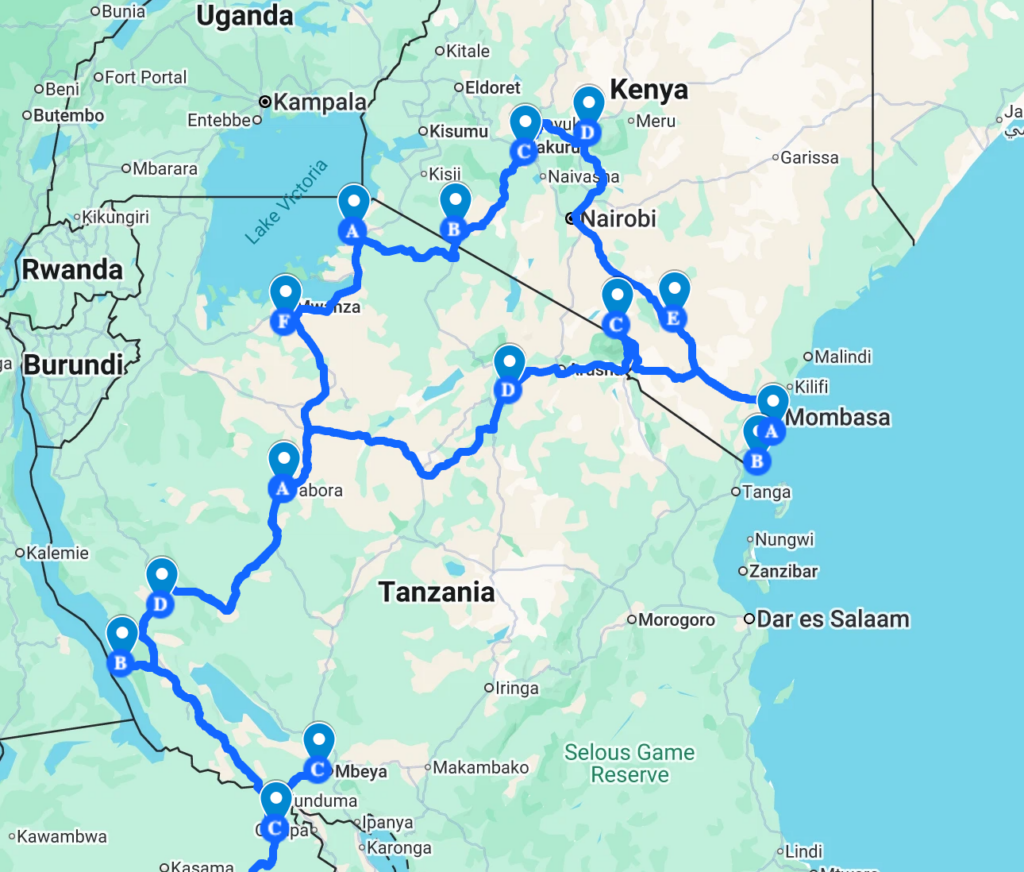
Led by Chris from Bluerhino Safaris, the convoy travels north through Zambia and Tanzania into Kenya, where the focus shifts to world-class wildlife viewing, dramatic highland scenery, and the relaxed rhythm of the Swahili coast before returning south through some of Africa’s most remote and beautiful regions.
The journey is divided into five distinct phases, each offering a different pace, atmosphere, and experience.
Section 1 — The Great Northward Trek: Kasane to Lake Victoria
21 – 30 June 2027 | ±3,400 km | 10 nights
The expedition begins with the long but rewarding push north — a true overland experience as the convoy settles into the rhythm of the road and finds its “bush legs.” We meet at Kasane, on the Chobe River where Botswana, Namibia, Zambia and Zimbabwe all come together, and cross into Zambia the next morning.
Travelling through Zambia and into Tanzania, this section focuses on movement, camaraderie, and the gradual transition from Southern Africa into East Africa’s landscapes and cultures.
A highlight along the way is a well-earned rest at the Kapishya hot springs — a chance to slow down, reset, and enjoy the African bush before continuing north toward Lake Victoria.
The journey concludes near Mwanza, known as “Rock City,” where massive granite boulders rise dramatically above the shores of the world’s largest tropical lake. Lake Victoria has long been a centre of trade, fishing, and regional culture, and reaching its southern shores marks the true gateway into East Africa.
Highlights include:
- Hot springs relaxation stop at Kapishya
- Historic Shiwa House and colonial-era heritage (optional visit)
- Katavi and the remote western Tanzanian route
- Arrival at Lake Victoria’s dramatic granite shoreline
Section 2 — Into the Heart of the Wild: Mwanza to the Masai Mara
1 – 4 July 2027 | ±470 km | 4 nights
From Lake Victoria the expedition turns toward one of Africa’s most legendary wildlife destinations — the Masai Mara — with a night on the Lake Victoria shore along the way.
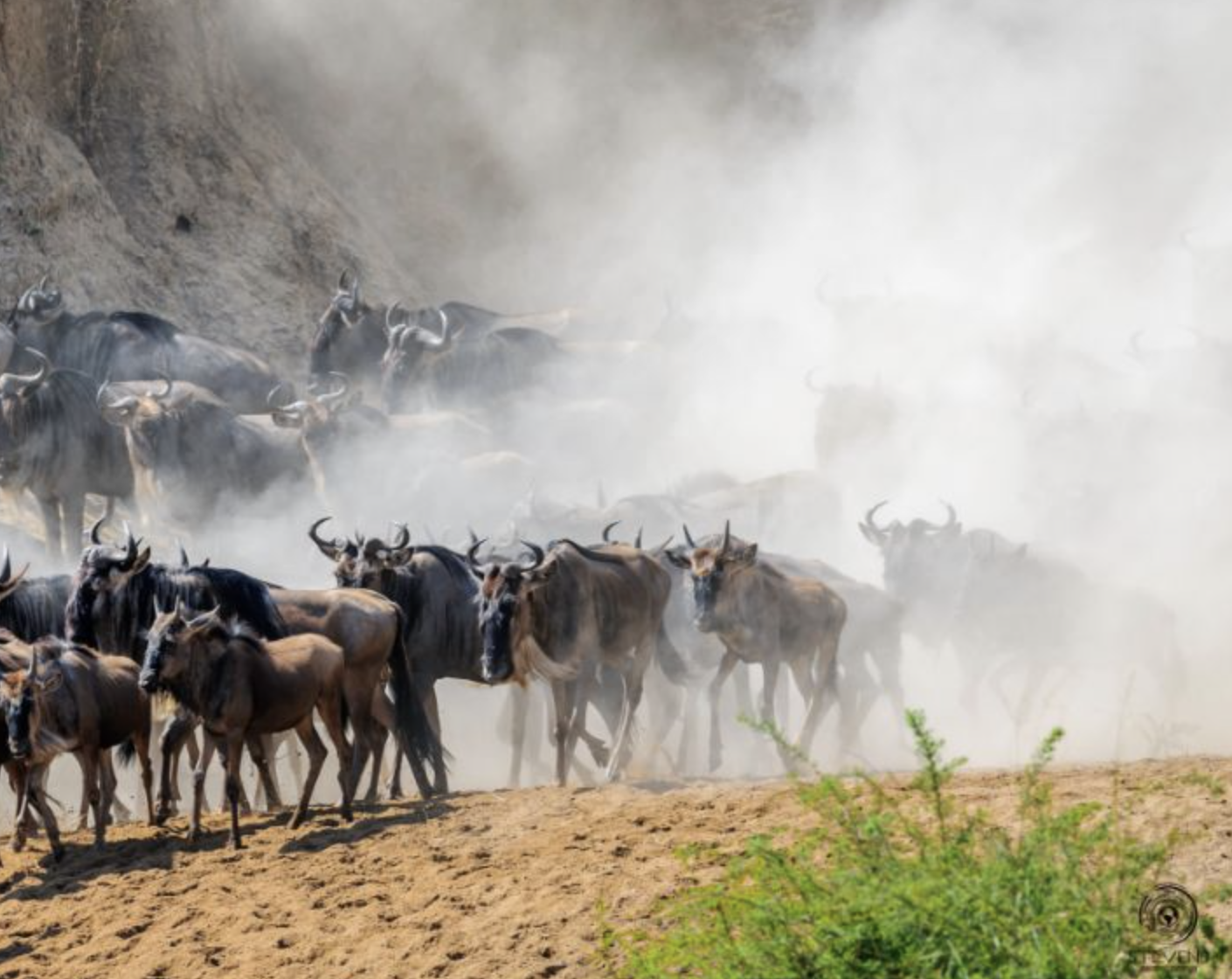
Crossing into Kenya, the scenery opens into classic savannah landscapes as the convoy approaches the reserve during peak migration season. Timing is everything, and early July typically coincides with the arrival of massive wildebeest herds moving north in search of fresh grazing.
To maximise wildlife viewing, we go into the reserve for the day with specialised local safari vehicles driven by experienced guides who know exactly where to find the action, while our own vehicles stay at camp, where we sleep every night. One full day in the Mara is included in the tour price; we are in the area for two days, so a second day in the reserve can be arranged at your own cost if you would like it.
Beyond wildlife, this region offers a deep cultural connection as the ancestral homeland of the Maasai people, adding another dimension to the experience.
Highlights include:
- Great Wildebeest Migration viewing
- A full day’s jeep safari in the Masai Mara (included; a second day optional at own cost)
- Classic East African savannah landscapes
- Local Maasai culture and craft markets
Section 3 — Peaks, Craters and Tea Country: Nakuru and the Mount Kenya region
5 – 8 July 2027 | ±400 km | 4 nights
After the Mara, the convoy continues deeper into Kenya’s highlands, climbing east through the lush green hills of Kericho’s famous tea plantations — a striking contrast to the open savannahs of the previous days.
Lake Nakuru National Park offers a different style of safari — compact, diverse, and known for rhino sightings, lion populations, and dramatic Rift Valley scenery shaped by ancient volcanic activity.
The journey then continues toward the Mount Kenya region, where we spend two nights near Naro Moru. Mount Kenya itself dominates the skyline, standing at 5,199 metres as Africa’s second-highest peak, creating a dramatic backdrop for this cooler, forested stage of the journey.
Highlights include:
- Self-drive exploration of Lake Nakuru National Park
- Rhino and big-cat viewing opportunities
- Scenic Rift Valley landscapes
- Kericho tea country and highland scenery
- Views toward Mount Kenya
Section 4 — The Swahili Coast Escape: Mount Kenya to the Indian Ocean
9 – 13 July 2027 | ±780 km | 5 nights
The expedition shifts pace as the convoy descends from the highlands toward the Indian Ocean.
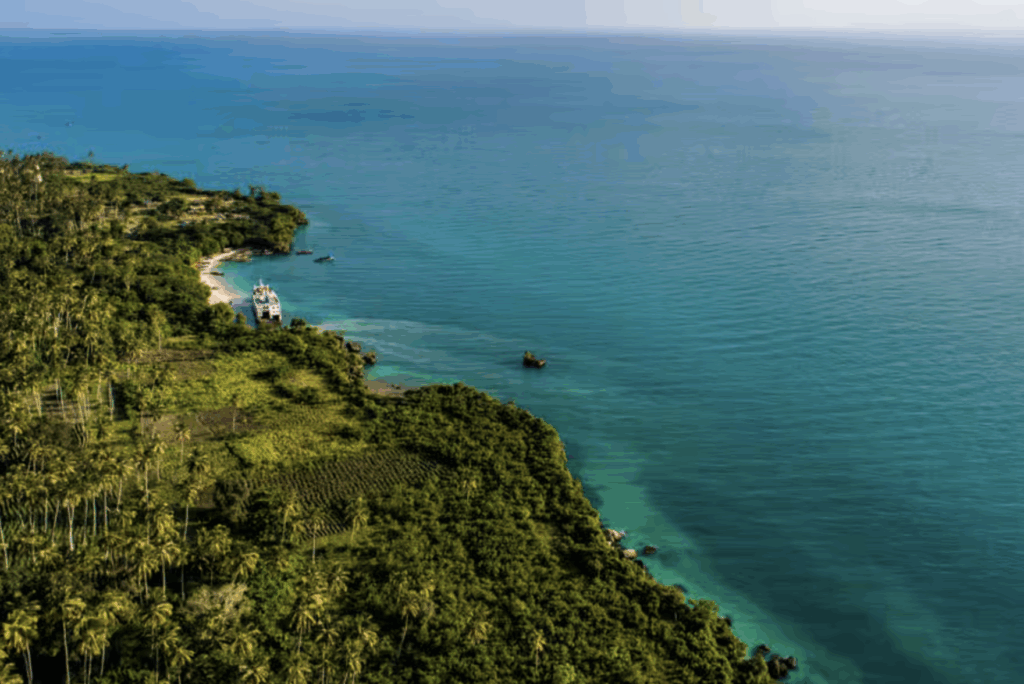
A transitional overnight stop breaks the journey before we drop down to the coast. Ahead lie four nights on Kenya’s south coast — some of the country’s most beautiful coastline, known for its white sand beaches and warm turquoise water.
This phase is intentionally slower, giving guests time to recharge after the inland adventure. Days can be spent swimming, beach walking, snorkelling or diving on vibrant coral reefs, or sailing traditional dhow boats along the coast.
For centuries, this coastline has been a crossroads of African, Arab, and Indian trade routes, creating the unique Swahili culture that still defines the region today.
Highlights include:
- Relaxed coastal lifestyle and beach time
- Snorkelling, scuba diving, and dhow sailing
- Swahili culture and historic coastal influences
- Indian Ocean marine ecosystems
Section 5 — The Elephant Empire and the Long Road Home: Amboseli to Nata
14 – 24 July 2027 | ±4,100 km | 11 nights
Leaving the coast behind, the expedition turns inland once more toward the Amboseli region — famous for vast elephant herds and some of Africa’s most iconic views of Mount Kilimanjaro rising above the plains.
Two nights near Kimana, on Amboseli’s eastern edge, allow time to experience this unique ecosystem and search for the legendary “tuskers” that roam the area. From there we cross back into Tanzania and begin the long, remote run south through western Tanzania.
The return journey south is designed with balance in mind. Rather than a rushed drive home, the route includes three nights on the shores of Lake Tanganyika — one of the world’s oldest and deepest freshwater lakes — and on their own they are some of the best three nights you will ever have. It is a proper holiday in the middle of an expedition: sunset cruises on the lake, snorkelling in its clear water, a good restaurant and relaxed group dinners, and time to simply swim, unwind and reflect on the adventure before the final stretch back through Zambia and Botswana.
The tour ends at Nata, in Botswana, on the evening of 24 July, with the drive home to Johannesburg on 25 July.
Highlights include:
- Amboseli’s elephant herds and Kilimanjaro views
- Remote overland driving routes through western Tanzania
- Three nights on Lake Tanganyika — a holiday on its own
- The shared achievement of a true African expedition

Join the Bluerhino Newsletter
Get new tour dates, availability and safari stories straight to your inbox — no spam, just Africa.